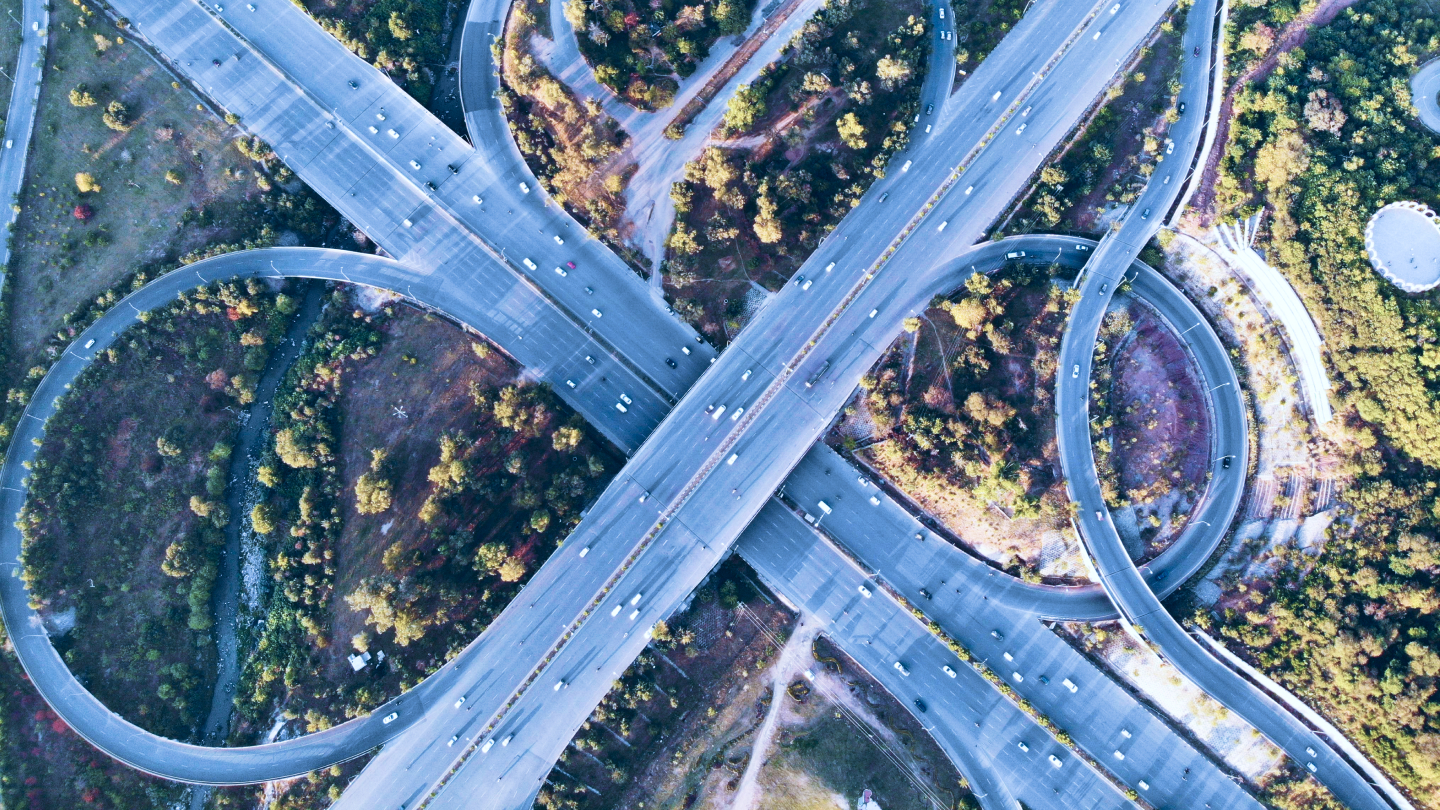
We have 8 billion parking spots for 1 billion cars.
Let that sink in. Eight parking spaces for every car on the planet. Not because we need them, but because we mandated them — zoning codes written in the 1950s that required parking everywhere, for everything.
The result is 1.26 trillion square feet of paved real estate. An area larger than Connecticut, dedicated to vehicles that sit parked 95% of the time.
What if we used 1% of it for people?
The Parking Inventory
No one knows exactly how many parking spaces exist. The infrastructure is so ubiquitous, so taken for granted, that we've never fully counted it.
But researchers have tried:
- United States: Estimated 500 million to 2 billion parking spaces
- Europe: Several hundred million more
- Globally: Best estimates suggest 7-8 billion spaces
Compare to the global vehicle fleet: approximately 1.4 billion cars, trucks, and buses.
We've paved the planet for vehicles that don't exist.
How We Got Here
The over-parking of America wasn't an accident. It was policy.
Starting in the 1950s, cities adopted "parking minimums" — requirements that every new building include a specified number of parking spaces. A restaurant needed one space per four seats. An office needed one space per 300 square feet. A church needed one space per three seats.
Where did these numbers come from? Mostly, cities copied each other. There was no scientific basis. A planner in one city made up a number, neighboring cities adopted it, and soon it became "standard."
The standards assumed:
- Everyone would drive
- Everyone would drive alone
- Parking should be free
- Parking should be abundant (never "full")
These assumptions made sense in 1955, when car ownership was expanding and land was cheap. They don't make sense in 2024, when land is expensive, climate change is urgent, and many people don't want to drive.
But the codes remain on the books, forcing developers to build parking that nobody wants or needs.
The Cost of Over-Parking
Parking isn't free. Someone always pays:
Land cost: In urban areas, land costs $100-$1,000+ per square foot. A 9×18-foot parking space consumes 162 square feet. At $200/sq ft, that's $32,400 in land value — for one space.
Construction cost: Surface parking costs $5,000-$10,000 per space to build (paving, striping, drainage, lighting). Structured parking costs $25,000-$50,000 per space.
Maintenance cost: Parking lots need resurfacing, restriping, lighting maintenance, snow removal. Roughly $500-$1,000 per space per year.
Opportunity cost: Land used for parking can't be used for housing, retail, parks, or anything else. In constrained markets, parking displacement makes everything more expensive.
These costs get passed to tenants, customers, and taxpayers. The "free" parking at the mall? Built into the price of everything you buy there.
The Shape of Parking
Beyond cost, parking shapes how cities look and feel:
Sprawl: When every building needs abundant parking, buildings spread out. Walking becomes impractical. More driving becomes necessary. More parking becomes necessary. A self-reinforcing cycle.
Dead zones: Parking lots are dead space — no activity, no eyes on the street, no reason to linger. They break up urban fabric and make streets feel hostile.
Heat islands: Asphalt absorbs solar radiation and releases it as heat. Parking lots make cities measurably hotter, increasing AC demand and heat-related illness.
Stormwater problems: Impervious surface doesn't absorb rain. Water runs off, carrying pollutants into waterways and overwhelming drainage systems.
Pedestrian hostility: In parking-dominated landscapes, walking feels dangerous and unpleasant. Children can't walk to school. Elderly can't walk to the store. Everyone drives, making the problem worse.
We've formatted our world for cars, and cars don't care about humans.
The 1% Proposition
What if we reclaimed 1% of global parking for human use?
One percent of 8 billion spaces = 80 million spaces
At 162 square feet each = 12.96 billion square feet
That's 298,000 acres. 465 square miles. Space for:
- 4 million homes (at typical suburban density)
- 80 million growing structures (one per space)
- 200,000 neighborhood parks (at 1 acre each)
We're not talking about eliminating all parking. We're talking about the margin — the excess spaces that sit empty 99% of the time.
Even 1% changes everything.
Where Thiosphere Fits
The Thiosphere was designed for parking-space footprints. Not as an accident, but as a strategy.
Standard parking space: 9 feet × 18 feet = 162 square feet
Thiosphere footprint: Approximately 160 square feet
One parking space = one Thiosphere module.
This design choice creates possibilities:
Residential conversions: Your driveway has two parking spots. You only have one car. Convert the extra spot to an Ergosphere home office.
Commercial conversions: A strip mall has 200 parking spaces. Studies show it only needs 100. Convert 10% to revenue-generating uses: Saunosphere wellness pods, Agrosphere growing stations, Ergosphere coworking spaces.
Municipal conversions: City-owned parking lots are chronically underutilized. Deploy community infrastructure: tool libraries, maker spaces, neighborhood gathering places.
The modularity matters. A Thiosphere can be installed without permanent changes to the site. If the parking is needed later, the structure relocates. This de-risks experimentation.
Real Examples
This isn't hypothetical. Parking-to-people conversions are happening:
San Francisco's Pavement to Parks: Since 2010, the city has converted parking spaces to "parklets" — small public spaces with seating, plantings, and sometimes retail uses. Over 60 parklets now exist, funded mostly by adjacent businesses.
Tactical urbanism: Cities like Austin, Minneapolis, and Miami have permitted temporary uses of parking lanes and lots — food markets, pop-up parks, outdoor dining. Many temporary uses became permanent.
Individual conversions: Homeowners are converting driveways to gardens, ADUs, and outdoor living spaces. In cities with relaxed zoning, this is increasingly common.
Commercial innovation: Some developers are building mixed-use structures on former parking lots, with parking underground or behind buildings instead of dominating the site.
The trend is clear. The parking era is ending. What replaces it is up to us.
The Objections
"But I need my car!"
Probably true. Most Americans depend on cars, and that won't change overnight.
But needing your car doesn't mean needing 8 parking spaces. It means needing 1 parking space — where you park, when you park.
The goal isn't to eliminate cars. It's to right-size the infrastructure. Build enough parking for actual demand, not 4-8x actual demand.
"Parking reform will hurt businesses!"
Evidence suggests otherwise. Studies of parking reform in cities like San Francisco, Seattle, and Buffalo show:
- Commercial activity often increases (more walkable = more foot traffic)
- Property values don't decline
- Access doesn't suffer when alternatives exist
Businesses that depend on convenient parking should have it. That's different from requiring it everywhere, regardless of context.
"Where will this infrastructure go?"
Good question. The Thiosphere is designed for distributed deployment:
- Residential backyards and driveways
- Commercial parking lots (partially converted)
- Underutilized municipal land
- Private property seeking income
Not megaprojects. Not redevelopment. Small structures on existing land, added incrementally.
The Vision
Imagine a neighborhood where:
- Excess driveways have become gardens and studios
- The strip mall parking lot is half retail pods, half trees
- The office park has Saunospheres for employee wellness
- Agrospheres on vacant lots produce food for local restaurants
Now imagine this at scale: thousands of neighborhoods, millions of converted spaces.
We don't need everyone to participate. We need 1%.
1% of parking spaces. 1% of car trips replaced. 1% of asphalt converted.
That's enough to prove the model. To show what's possible. To create momentum for more.
Let's Reclaim the Asphalt
I'm not anti-car. I own a car. Sometimes driving is the right choice.
But we've over-built for cars in ways that harm everyone — drivers included. The sprawl that parking created makes trips longer. The space dedicated to parking makes housing more expensive. The infrastructure we maintain serves vehicles that don't exist.
The Thiosphere is one small tool for reclaiming this space. Parking-space footprint. Modular construction. Relocatable if needed.
One structure at a time. One parking space at a time. One neighborhood at a time.
Let's reclaim the asphalt.
Get the Handbook — complete plans for parking-space-sized structures.
Explore the product line — structures for every use case.
Join the community — connect with others reclaiming space for people.