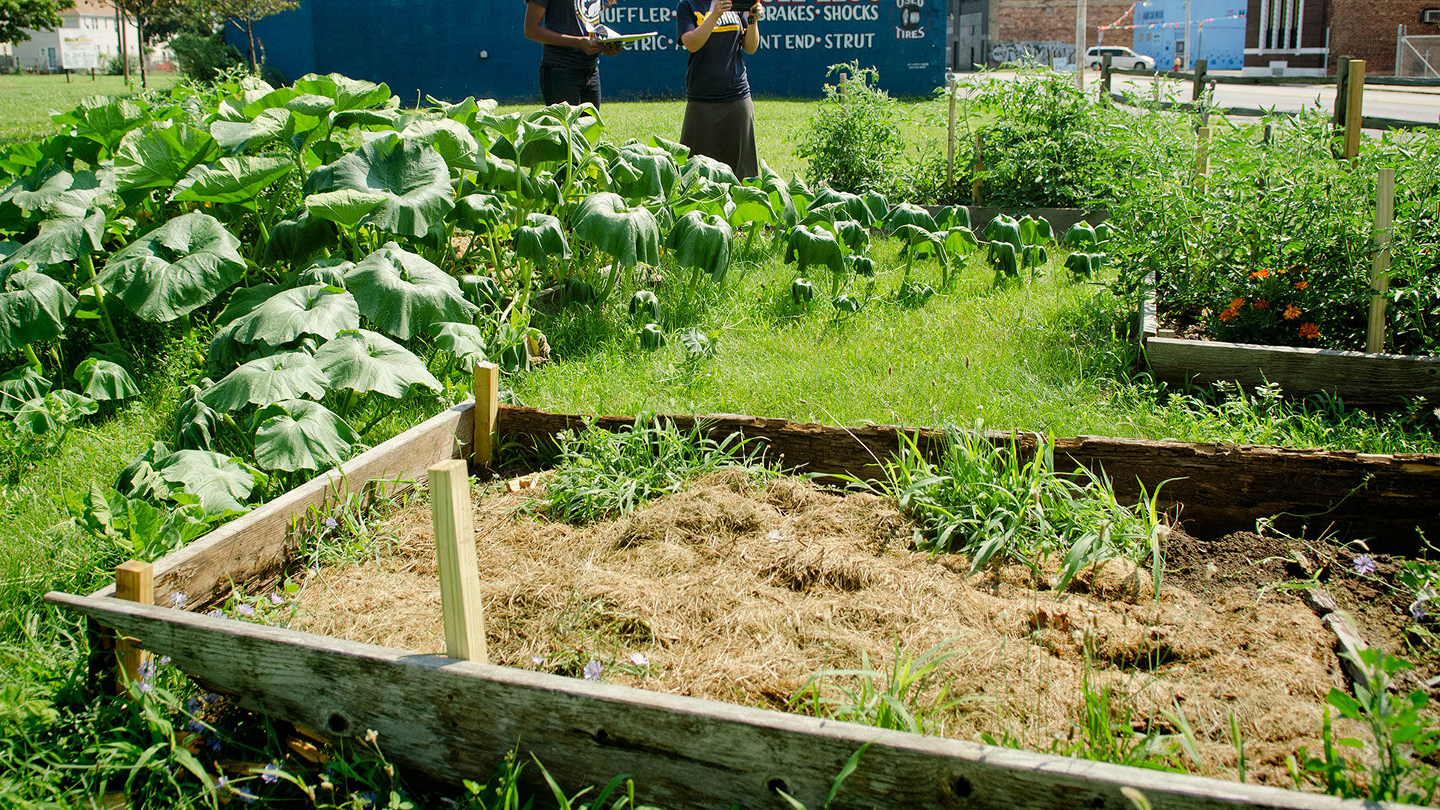
Raised beds are everywhere. Urban lots, community gardens, suburban backyards — the rectangular wooden frames filled with soil have become the default for home food production.
And they work. Raised beds are better than nothing. They've helped millions of people grow food where they couldn't before.
But they're also limited. Dramatically limited. If you're serious about food production — not hobby gardening, but actually reducing your dependence on grocery store supply chains — raised beds leave most of the potential on the table.
What Raised Beds Get Right
Let's start with what they do well:
Defined Growing Space
A raised bed creates a clear boundary: inside is garden, outside is not. This psychological clarity helps people commit to maintenance. The weeds stay out (mostly). The soil stays in.
Improved Soil
You control what goes in a raised bed. No existing contamination, no clay hardpan, no mystery composition. Good soil from day one.
Accessibility
Raised height reduces bending and kneeling. For elderly gardeners or those with mobility issues, this matters.
Quick Start
Buy lumber, fill with soil, plant. You can go from bare ground to growing food in a weekend. No tilling, no soil amendment of existing ground, no multi-year improvement process.
These are real benefits. For someone who has never grown food, a raised bed is a great starting point.
But then you hit the limits.
The Season Problem
The biggest limit: raised beds are exposed to weather.
In my climate (Minnesota), the outdoor growing season is roughly May through September — five months. The other seven months, raised beds are useless. Buried under snow, frozen solid, producing nothing.
Even in the growing season, frost can hit unexpectedly. Spring frost destroys early plantings. Fall frost ends the season abruptly. The "five months" is really more like four months of reliable growing.
Four months of production. Eight months of nothing.
If you're trying to meaningfully reduce grocery dependence, this math doesn't work. You'd need to grow a year's worth of food in four months, then preserve it all. Very few people do this successfully.
The Agrosphere addresses this directly: enclosed, climate-controlled, year-round production. Twelve months of growing, not four.
The Pest Problem
Raised beds are open. Birds land in them. Squirrels dig in them. Rabbits eat from them. Insects have unrestricted access.
Gardeners respond with:
- Netting (helps with birds, not insects)
- Fencing (helps with rabbits, not birds)
- Pesticides (introduces chemicals to your food)
- Deterrents (sometimes work, often don't)
Each solution adds cost and maintenance. None fully solves the problem.
The Agrosphere is enclosed. Not hermetically sealed — air circulates — but physically screened. Birds can't land on your lettuce. Rabbits can't reach your beans. Most flying insects are excluded.
Pests still appear occasionally (they come in on seedlings or through ventilation), but the pressure is dramatically reduced. Integrated pest management becomes practical because you're dealing with stragglers, not continuous invasion.
The Water Problem
Raised beds drain freely. This is by design — you don't want roots sitting in water. But free drainage means:
- Water escapes before plants fully use it
- Soil dries quickly in heat
- Daily watering required during summer
- Irregular watering causes stress (blossom end rot, cracking, bolting)
Many gardeners install drip irrigation, which helps with consistency but doesn't address evaporation. On a hot July day, moisture evaporates from exposed soil faster than roots can absorb it.
The Agrosphere uses enclosed growing systems where water recirculates. Hydroponic towers recapture runoff. Soil beds are covered to reduce evaporation. Humidity is controlled, reducing plant water demand.
Water efficiency in an Agrosphere is roughly 90% — meaning 90% of water input ends up in plants. Raised bed efficiency is typically 30-40%. You use less water and achieve better results.
The Space Problem
Raised beds use space in two dimensions. Plants grow outward (taking horizontal space) or upward (but with no infrastructure to support climbing).
A 4x8-foot raised bed provides 32 square feet of growing area. That's it. The space above the bed — potentially 6-8 feet of vertical volume — is unused.
The Agrosphere uses three dimensions:
- Floor-level beds for spreading plants (squash, peppers)
- Vertical towers for leafy greens (lettuce, chard, herbs)
- Overhead space for climbing plants (cucumbers, beans)
- Hanging baskets for trailing plants (strawberries, cherry tomatoes)
Same footprint, 3-4x the productive capacity.
The Mobility Problem
Most raised beds are built in place and stay there. Heavy with soil, often screwed together, sometimes with landscaping built around them.
This creates problems:
- Can't relocate if sun patterns change
- Can't move if you move to a new home
- Can't adjust if soil becomes contaminated
- Stuck with suboptimal placement decisions
The Agrosphere sits on an elevated platform with removable connections. If you need to relocate — new home, better sun position, different use of the space — the structure can be disassembled and moved.
Not as easily as furniture, but feasible in a weekend. Compare to the permanent installations most raised beds become.
The Production Comparison
Let's quantify the difference.
4x8-foot raised bed (32 square feet):
- Growing season: 4-5 months
- Vertical utilization: minimal
- Annual lettuce production: ~15-25 heads
- Annual tomato production: 4-8 plants worth
- Annual pepper production: 4-6 plants worth
4x8-foot Agrosphere footprint (slightly larger for walls):
- Growing season: 12 months
- Vertical utilization: 3-4x floor area
- Annual lettuce production: ~200+ heads
- Annual tomato production: 12-16 plants worth
- Annual pepper production: 8-12 plants worth
The Agrosphere produces roughly 8-10x more food from the same ground footprint. Some of this is season extension; some is vertical space; some is environmental control enabling higher yields per plant.
The Investment Comparison
Raised beds are cheap. That's part of their appeal.
4x8-foot raised bed cost:
- Lumber: $50-150
- Soil: $50-100
- Basic supplies: $25
- Total: $125-275
Agrosphere cost:
- Structure: ~$2,300
- Growing systems: ~$500
- Climate control: ~$800
- Total: ~$3,600
The Agrosphere costs roughly 15x more upfront.
But look at cost per unit of production:
Raised bed: $200 investment / 40 lbs annual production = $5/lb
Agrosphere: $3,600 investment / 500 lbs annual production = $7.20/lb (year 1)
After year 1, the per-pound cost for the Agrosphere drops rapidly (structure lasts 20+ years), while raised bed production stays flat or declines (soil depletion, pest buildup, wood rot).
By year 5:
- Raised bed: ~$2/lb (accounting for replacement and maintenance)
- Agrosphere: ~$1.50/lb (structure paid off, ongoing costs only)
The Agrosphere becomes cheaper per pound of production within a few years, then stays cheaper indefinitely.
When Raised Beds Make Sense
I'm not saying raised beds are bad. They make sense when:
You're learning: Start with raised beds to understand basic gardening before investing in infrastructure.
Budget is severely constrained: If $200 is the maximum you can invest, a raised bed beats no garden.
Space is temporary: If you're moving within a year or two, a raised bed's impermanence is a feature.
Goals are modest: If you want fresh tomatoes in summer, not year-round food security, a raised bed suffices.
Climate is mild: In zones 9-11, raised beds produce nearly year-round. Season extension matters less.
For serious food production — reducing grocery dependence, building resilience, maximizing a small space — raised beds are a starting point, not an ending point.
Upgrade Path
If you have raised beds and want to move toward more serious production:
Step 1: Add season extension to existing beds. Row covers, cold frames, and low tunnels can stretch a 5-month season to 7-8 months.
Step 2: Add vertical growing. Trellises for climbing plants, vertical planters alongside beds, hanging baskets over pathways.
Step 3: Add one enclosed structure. A single Agrosphere alongside existing beds provides year-round production for high-value crops while beds handle overflow during the summer.
Step 4: Transition fully. Once you experience year-round production, the seasonal beds become less compelling. Convert their space to other uses or add more enclosed capacity.
The Agrosphere isn't meant to replace all home growing. It's meant to provide the year-round, high-intensity production that raised beds can't deliver.
The Invitation
Raised beds are a good start. But if you've been gardening for a few years and want more — more production, more seasons, more reliability — it's time to consider enclosed growing.
The Agrosphere takes the same footprint as a raised bed and multiplies its output by 8-10x. Same parking-space of ground. Dramatically different results.
Same footprint. 4x the production. 12-month season.
Explore the Agrosphere — what comes after raised beds.
Get the handbook — complete plans for year-round growing.
Join the community — connect with growers who've made the transition.