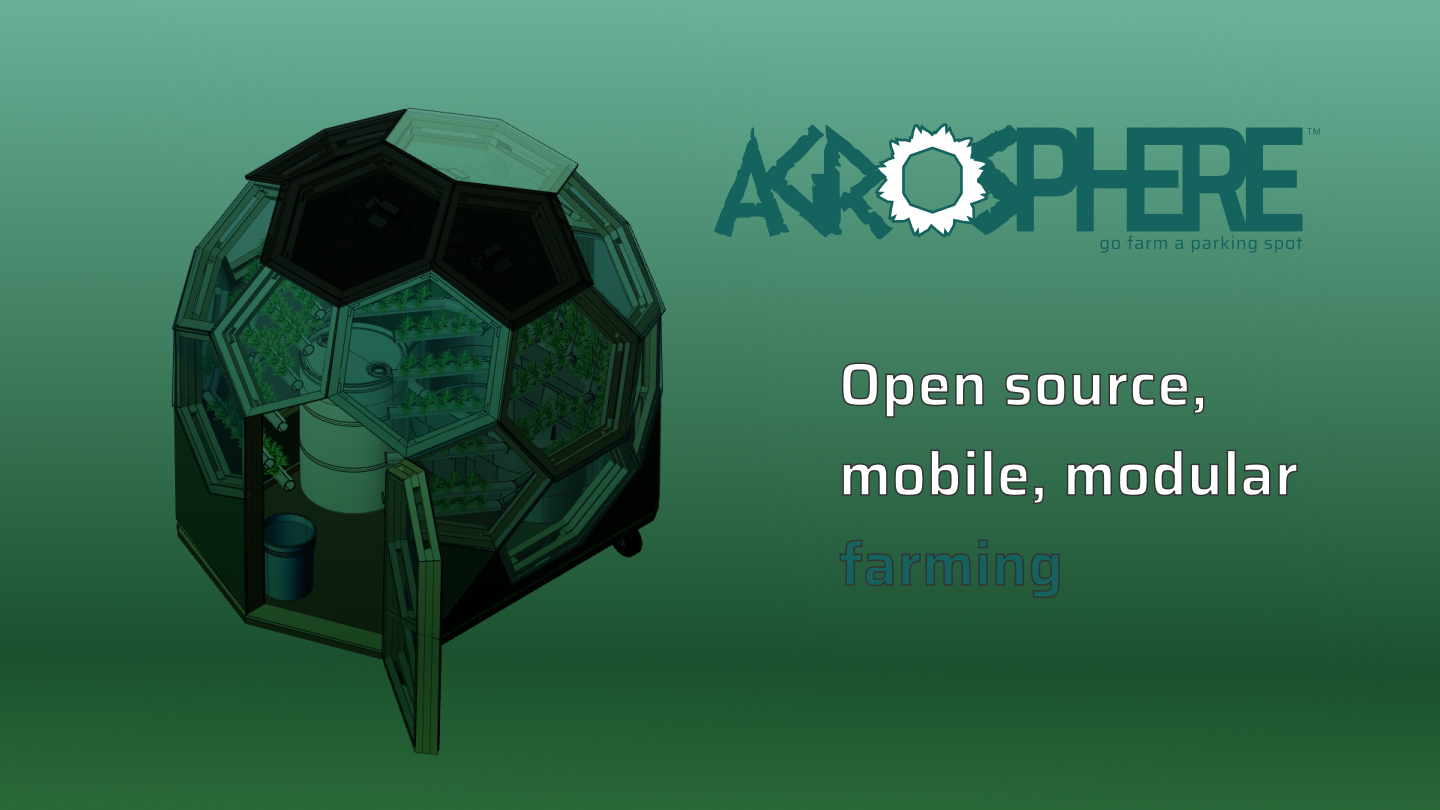
What if you could farm a parking spot?
The question sounds absurd. Parking spots are for cars. Farms are sprawling rural operations. The two don't overlap.
But look at the numbers:
- A parking spot is roughly 160 square feet
- An Agrosphere footprint is about the same
- A well-designed Agrosphere produces 400-600 pounds of food annually
- That's enough fresh vegetables for a family of four
The Agrosphere transforms car-shaped spaces into food-producing spaces. This post explains why it exists, what it produces, and who it's for.
The Food Freshness Problem
Our current farm-to-market model has a dirty secret: "fresh" produce isn't fresh.
The journey:
- Vegetables are harvested in California (or Mexico, or Chile)
- They're transported to regional distribution centers
- They're shipped to local distribution centers
- They're stocked on store shelves
- You buy them and put them in your fridge
The timeline: 7-21 days from harvest to consumption. Sometimes longer.
The compromise: Commercial varieties are bred for shipping durability, not nutrition or flavor. Tomatoes are hard and tasteless because soft flavorful tomatoes would be mush by the time they reach you.
The result: The lettuce in your fridge is two weeks old, picked before full ripeness, selected for industrial convenience over nutritional density.
Compare to backyard produce: harvested minutes before eating, at peak ripeness, varieties selected for flavor and nutrition. The difference is obvious to anyone who's tasted both.
The problem: not everyone has a backyard.
The Space Problem
Urban and suburban food production faces constraints:
No land: Apartments, townhouses, and small lots have minimal growing space.
Wrong climate: Half the year, outdoor growing is impossible in northern climates.
Pests and pollution: Urban gardens face contaminated soil, air pollution, and pest pressure.
Water access: Efficient watering is difficult without infrastructure.
Aesthetic restrictions: HOAs and neighbors often object to vegetable gardens.
Traditional solutions don't work:
- Community gardens have long waitlists and distance from home
- Rooftop gardens require structural capacity and building owner approval
- Vertical farms are commercial-scale operations, not household solutions
- Container gardening is possible but low-yield and maintenance-intensive
The Agrosphere addresses all of these constraints.
The Agrosphere Solution
The Agrosphere is the Thiosphere platform configured for controlled-environment growing.
Core Features
Climate control: The enclosed, insulated structure can maintain growing temperatures year-round. In Minnesota winters, the interior stays at 65-75°F while it's -20°F outside.
Growing systems: The interior is configured with:
- Vertical hydroponic towers for leafy greens
- Soil beds for fruiting crops (tomatoes, peppers, cucumbers)
- Overhead space for climbing plants
- Seedling stations for starting transplants
Light supplementation: LED grow lights extend daylight hours and enable year-round production. Natural light through windows reduces energy costs in summer.
Water efficiency: Hydroponic systems recirculate water. Soil beds have drip irrigation with collection. Overall water efficiency is 80-90% — far better than outdoor growing.
Pest exclusion: The enclosed structure keeps out most pests. Screening on ventilation prevents flying insects. The controlled environment makes integrated pest management practical.
Production Capacity
What can an Agrosphere actually produce?
Annual yield estimates (12-month growing season, optimized management):
| Crop | Annual Production |
|------|------------------|
| Lettuce | 200-300 heads |
| Tomatoes | 150-200 lbs |
| Peppers | 75-100 lbs |
| Cucumbers | 100-150 lbs |
| Herbs | Year-round supply |
| Greens (chard, kale) | 100-150 lbs |
Total: 400-600 lbs of produce annually
Value: At retail prices ($2-6/lb depending on crop), the Agrosphere produces $1,200-2,400 worth of produce annually.
Payback: The structure pays for itself in produce value within 2-4 years.
But the value proposition isn't just economic. It's freshness, flavor, nutrition, and food security that money can't buy at the store.
Who This Is For
Urban and Suburban Homeowners
You have a driveway, patio, or yard space equivalent to a parking spot. You want fresh food but don't have traditional gardening space.
The Agrosphere gives you a complete growing operation in that footprint. Year-round production. Climate-controlled. Low maintenance compared to outdoor gardens.
Food Security Advocates
Supply chains are fragile. We learned this during COVID-19 when grocery shelves went empty.
The Agrosphere provides household-level food security. You're not dependent on trucks arriving from thousands of miles away. You produce food where you consume it.
Restaurants and Food Businesses
Chefs pay premium prices for truly fresh produce. An Agrosphere behind a restaurant provides:
- Same-day harvest for maximum freshness
- Varieties selected for flavor, not shipping
- Marketing value ("grown on-site")
- Independence from supplier disruptions
Several early Agrosphere builders are restaurateurs looking to differentiate on quality.
Community Organizations
Churches, schools, community centers — organizations with parking lots have space for Agrospheres.
Uses:
- Educational programs teaching food production
- Community food access initiatives
- Demonstration of sustainable technology
- Community gathering around shared growing
One Agrosphere can supplement a community garden, providing year-round production when outdoor plots are dormant.
Preppers and Resilience Planners
If grid-down scenarios concern you, food production capability matters.
The Agrosphere can operate on:
- Grid power (normal operation)
- Generator backup (extended outages)
- Solar + battery (off-grid capable with proper sizing)
It's infrastructure for food resilience, not just a garden.
The Build
Building an Agrosphere adds growing-specific requirements to the base Thiosphere:
Structure: Standard Thiosphere construction with additional considerations:
- Floor drains for water management
- Electrical capacity for lighting and climate control
- Ventilation for humidity management
Growing systems: Built after structure is complete:
- Hydroponic tower systems (we recommend specific models)
- Soil beds with drainage
- Trellising for climbing plants
- Seedling station with lighting
Climate control: Options based on your climate:
- Moderate climates: Ventilation + small heater
- Extreme climates: Mini-split heat pump (recommended)
- All climates: LED grow lights for winter supplementation
Time: 60-80 hours including growing system installation
Cost: ~$4,500-6,500 including growing systems and basic lighting
Ongoing Management
An Agrosphere requires regular attention:
- Daily: Check plants, adjust environmental controls (~15 minutes)
- Weekly: Harvest, prune, start new plantings (~2-3 hours)
- Monthly: System maintenance, nutrient management (~2-4 hours)
- Seasonal: Major replanting, equipment checks (~4-6 hours)
This is more work than buying groceries. But it's less work than a traditional garden of equivalent production — and the production is year-round.
Development Status
The Agrosphere is in Phase 2 (WALK):
What's validated:
- Structure maintains growing temperatures in extreme climates
- Hydroponic systems perform as expected
- Annual production targets are achievable
- Water efficiency exceeds outdoor growing by 5-10x
What we're still testing:
- Optimal growing system configurations
- Energy consumption in various climates
- Best crop selection for different goals
- Long-term maintenance requirements
What's coming:
- Detailed growing guides for specific crops
- Energy monitoring and optimization
- Community crop planning templates
- Partnerships with growing system manufacturers
Getting Started
If the Agrosphere matches your vision:
1. Assess your goals: Food for your household? Supplemental income? Community project? Goals shape configuration.
2. Site selection: Full sun is ideal. Access to water and power is essential.
3. Research growing systems: Hydroponics? Soil? Both? The handbook covers options.
4. Build the structure: Follow standard Thiosphere process with Agrosphere-specific notes.
5. Install growing systems: After structure is complete, build out the interior.
6. Start growing: Begin with easy crops (lettuce, herbs) before advancing to fruiting plants.
The Invitation
The same space that holds a car could feed a family.
The Agrosphere reclaims car-shaped spaces for growing food. Year-round production. Climate control. Fresh food steps from your kitchen.
We've formatted too much of our world for cars. The Agrosphere is a small step toward formatting it for people.
Build your food. Build your resilience. Build your Agrosphere.
Learn more about the Agrosphere — Design details and development status.
Get the Handbook — Includes Agrosphere configuration guide.
Join the community — Connect with other growers building their spaces.