Every project needs a plan. Not because the plan will be followed exactly — it won't — but because planning forces you to think through the sequence, dependencies, and milestones.
This post documents Thios's initial roadmap: where we started, where we're going, and why each phase matters.
The Five Phases
Phase 1: Concept (2024) ✓
Goal: Prove the idea works on paper.
Before building anything physical, I needed to answer basic questions:
- Is a polyhedral sphere actually better than a rectangle? (Yes, for thermal efficiency)
- Can it be built from standard lumber? (Yes, with specific panel geometry)
- Is the cost achievable? (Yes, under $5,000 target)
- Is the construction DIY-accessible? (Yes, with proper documentation)
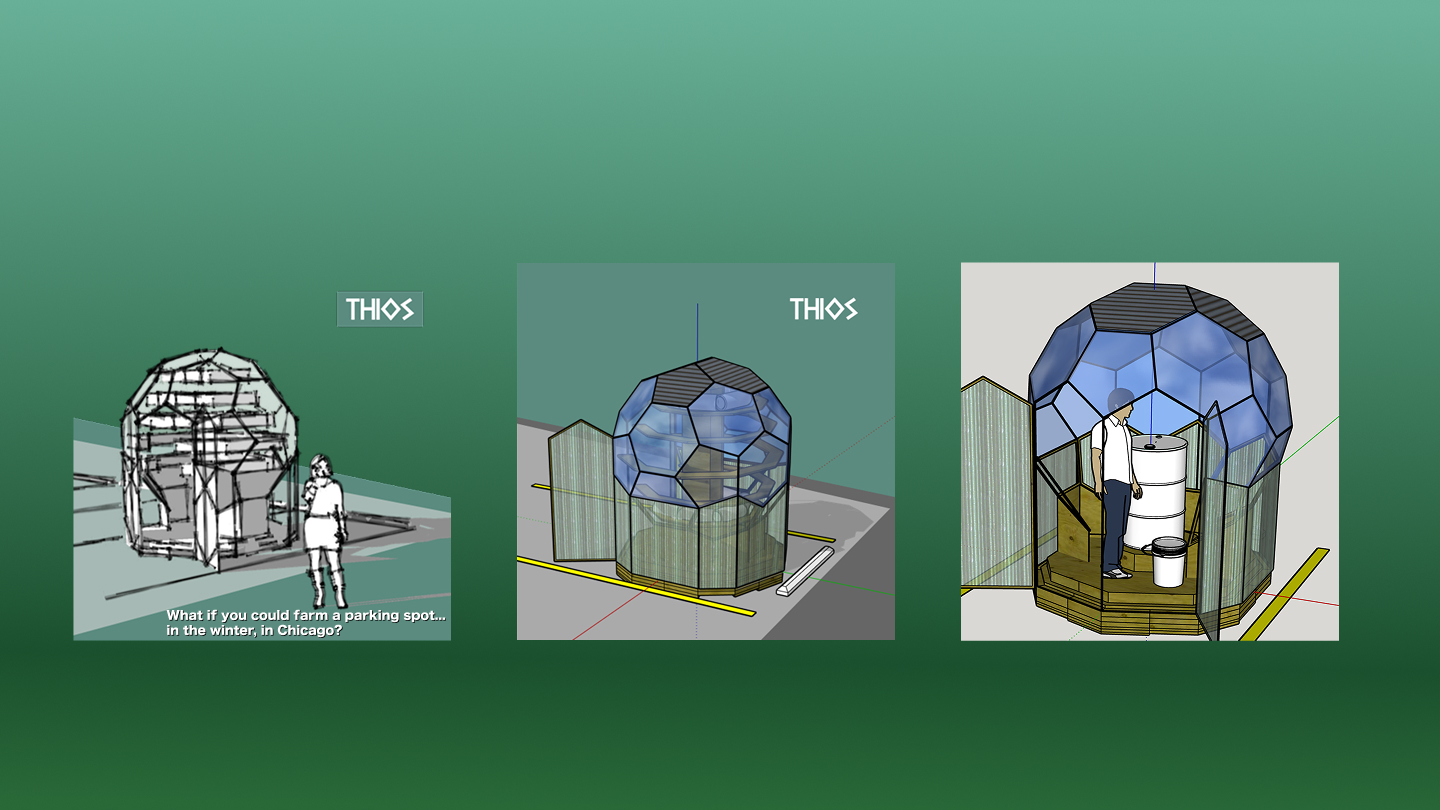
This phase was design work: sketches, calculations, CAD modeling, materials research.
Key milestone: A complete CAD model that could theoretically be built.
What I learned: Paper designs are necessary but insufficient. Many assumptions only get tested in physical reality.
Phase 2: Prototyping (2024) ✓
Goal: Prove the idea works in physical reality.
Prototyping meant actually building structures and seeing what happened:
- Proto 1: Saunosphere — tested basic structure and thermal performance
- Proto 2: Immosphere — tested platform versatility
- Proto 3: Agrosphere — tested the most demanding use case
Each prototype revealed problems the CAD model couldn't show: door seals that leaked, ventilation that needed tuning, drainage details that needed improvement.
Key milestone: Three functional prototypes, each validating a different use case.
What I learned: Real builds are humbling. Every prototype found problems that seemed obvious in retrospect.
Phase 3: Launch (2025) ← We Are Here
Goal: Make the designs available to others.
This is the current phase. The prototypes work; now others need access to build their own.
Launch includes:
- Handbook: Complete documentation — theory, cut lists, assembly sequences, configuration guides
- Store: E-commerce for handbook sales
- Website: Product information, philosophy, community connection
- CAD files: Public OnShape documents for modification and contribution
Key milestone: First sales to people I've never met.
What I learned (so far): Documentation is harder than design. Explaining why something works takes longer than making it work.
Phase 4: Community (2025-2026)
Goal: Build a network of builders helping each other.
Solo builders can follow instructions. Communities share knowledge that instructions can't capture: regional material variations, climate-specific adaptations, creative modifications.
Community phase includes:
- Discord/forum: Real-time discussion and support
- Build documentation: Encouraging builders to share their projects
- Regional chapters: Local groups who can help each other with physical builds
- Contributor program: Incorporating community improvements into official designs
Key milestone: More builds completed by community members than by me.
What I expect to learn: What I got wrong. Where the documentation is unclear. What use cases I haven't imagined.
Phase 5: Scale (2026+)
Goal: Reduce barriers beyond what DIY documentation can achieve.
Some people want to build but lack tools, time, or confidence. Scale phase creates additional pathways:
- Material kits: Pre-cut panels and fasteners shipped to customers
- Template kits: Physical templates for DIYers who want to do their own cutting
- Complete structures: Factory-built units for those who want turnkey solutions
- Certified builders: Network of experienced builders who can build for others
Key milestone: Structures being built by people who never touched the handbook.
What I expect to learn: The economics of physical product fulfillment. What customers actually want vs. what I assumed they want.
Why These Phases, In This Order
The sequence matters:
Concept before Prototyping: Building without design wastes materials on ideas that don't work.
Prototyping before Launch: Publishing designs that haven't been tested wastes users' time and trust.
Launch before Community: You can't build community around vaporware. People need something real to gather around.
Community before Scale: Premature scaling spreads bad ideas. Community feedback improves the design before it reaches more people.
Each phase builds on the previous. Skip one and the rest wobble.
What Stays Constant
Plans change. Direction doesn't.
The direction for Thios:
- Accessible shelter design: Structures that regular people can build
- Open source: Designs shared freely, improvements contributed back
- Honest cost: Real prices, real expectations, no hidden complexity
- Community-driven: Builders helping builders
These principles don't change based on which phase we're in. They're the "why" behind everything.
What Changes (And Why That's OK)
Specific tactics change constantly:
- The CAD tool changed (Plasticity → OnShape)
- The pricing structure changed (based on customer feedback)
- The launch date changed (prototypes took longer than expected)
- The platform priorities changed (Saunosphere first instead of Agrosphere)
This is normal. Plans are hypotheses. Reality tests hypotheses. Adaptation follows.
The dangerous pattern is changing direction to avoid difficulty. If building community is hard (it will be), the answer isn't to skip community. It's to find better ways to build community.
Milestones vs. Timelines
Notice that I've listed milestones, not dates.
Traditional roadmaps say "Q2 2025: Launch community features." This creates two problems:
- False precision: Nobody knows how long things take until they're done
- Perverse incentives: Missing dates feels like failure, so you either rush (bad quality) or sandbag (slow progress)
Milestone-based planning asks: "What needs to be true before we move to the next phase?" When those things are true, we move. When they're not, we keep working.
Concept → Prototyping: Move when the design is buildable
Prototyping → Launch: Move when prototypes work and documentation exists
Launch → Community: Move when enough builders exist to form community
Community → Scale: Move when designs are stable enough to manufacture
The timing emerges from the work, not from arbitrary calendar targets.
What Could Go Wrong
Every plan has failure modes. Here are the ones I'm watching:
Documentation Debt
I might ship incomplete documentation to hit a milestone, then never go back to fill the gaps.
Mitigation: Every build that hits a documentation gap becomes a ticket. Gaps get fixed before new features.
Community Fragmentation
Early builders might form cliques that make newcomers feel unwelcome.
Mitigation: Explicit community guidelines. Active moderation. Celebrate every builder, not just prolific ones.
Premature Scaling
I might be tempted to sell kits before the design is stable, then be stuck supporting a bad version.
Mitigation: Clear criteria for design stability. No kits until community has built enough to find the problems.
Founder Bottleneck
Everything might depend on me personally, making the project fragile.
Mitigation: Document everything. Empower community contributors. Build systems, not dependencies.
Your Part
If you're reading this, you might be part of the plan:
Builders: You're the whole point. Build something. Document it. Share what you learn.
Critics: Find the problems. Tell me where the design fails, where the documentation is unclear, where I've made bad assumptions.
Contributors: Improve the designs. Submit modifications. Write documentation. Help other builders.
Watchers: That's fine too. Follow along. Join when the time is right.
This plan works if people participate. It stalls if I'm building alone.
The Invitation
Plan changes. Direction doesn't.
The direction is clear: accessible shelter design, shared freely, improved by community.
We're in Phase 3: Launch. The designs exist. The documentation exists. The store exists.
Now we need builders.
See the current roadmap — where we are and what's next.
Get the handbook — join the first wave of builders.
Join the community — help shape what comes next.