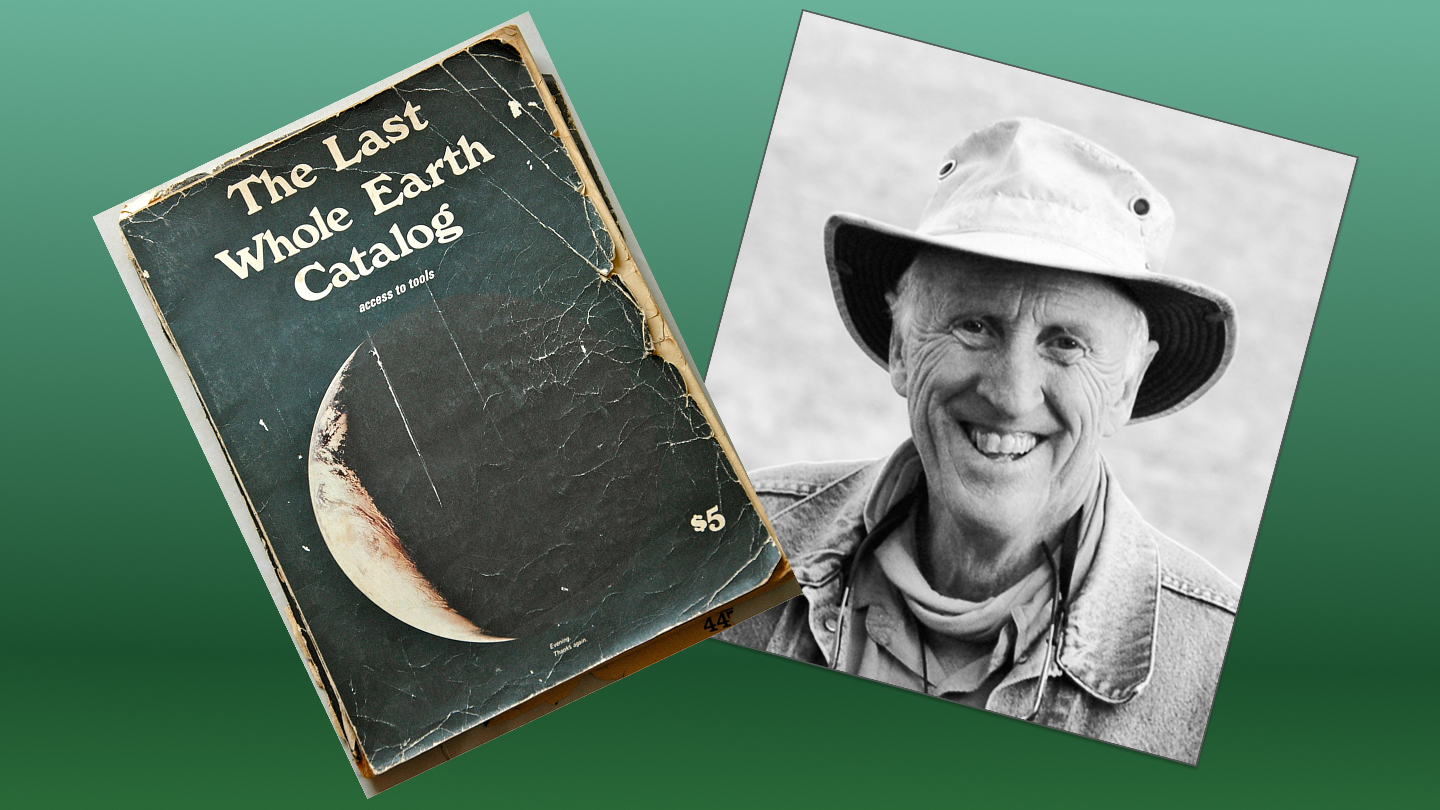
"Access to tools."
Three words. That was the mission statement of the Whole Earth Catalog when it launched in 1968. Stewart Brand and his collaborators weren't building a company or a brand — they were building a movement.
If you've never seen the original Catalog, find a copy. It's part product review, part philosophy journal, part commune newsletter. It reviewed everything from hand tools to books to land — anything that could help someone live a more self-sufficient, intentional life.
Steve Jobs famously called it "Google in paperback form, 35 years before Google came along."
But the Catalog was more than a search engine. It was a curation. It was someone saying: "I've done the research. Here's what actually works. Here's how to do it yourself."
That's what we're trying to build with Thios.
From "Access to Tools" to "Access to Space"
The original Catalog focused on tools: physical objects you could buy to solve problems. Axes, wheelbarrows, solar water heaters, meditation cushions.
But in 2024, the limiting factor for most people isn't tools. It's space.
Try to build a backyard office. Price out a greenhouse. Look into a sauna. You'll find that the structures themselves — the space to put the tools — costs 10-50x what the tools inside will cost.
A basic backyard shed from Home Depot: $2,000-5,000.
A custom-built shed that doesn't look terrible: $8,000-15,000.
A greenhouse that won't collapse in winter: $15,000-40,000.
A proper sauna: $10,000-30,000.
These prices lock out most people. If you can't afford the space, you can't use the tools.
Thios exists to democratize space the way the Catalog democratized tools.
What We Learned from the Catalog
Reading through original Catalog issues, several principles emerge that shape how we build Thios:
1. Curation Over Comprehensiveness
The Catalog didn't list every product available. It listed the best products, with honest reviews explaining why they were best — and when they weren't.
For Thios, this means we don't publish every possible shelter design. We focus on designs that:
- Can be built with standard hardware store materials
- Don't require specialized tools or skills
- Have been actually tested in real conditions
- Represent the best tradeoff of cost, complexity, and durability
When there's a better way to build something, we update the designs. The handbook is a living document, not a static PDF.
2. Knowledge Transfer, Not Product Sales
The Catalog's revenue model was simple: sell the book itself. They weren't taking commissions from manufacturers or steering people toward expensive options.
Thios works the same way. The handbook is $29. That's the product. We're not selling you lumber, tools, or installation services. We're selling you the knowledge to do it yourself.
The designs are open source. If you want to figure it out yourself from the CAD files, go for it — they're free. The handbook is for people who want the step-by-step path, the lessons we learned from failures, the specific cut lists and assembly sequences that save hours of guessing.
3. Community Contribution
The Catalog evolved through reader letters. People would write in: "I tried that chainsaw you recommended. Here's what you got wrong." The next edition would include the correction.
Thios is building the same feedback loop. Every handbook buyer gets access to our Discord community. When someone finds a better way to make a cut, or discovers that a certain plywood brand warps in humidity, that knowledge gets folded back into the next revision.
The goal is for the handbook in 2028 to be dramatically better than the handbook in 2024 — not because we hired more engineers, but because hundreds of builders contributed their experience.
4. Respect for the Reader
The Catalog assumed its readers were intelligent adults who could make their own decisions. It gave honest assessments — "this is great for X, terrible for Y" — and let readers decide.
We try to do the same. The Thiosphere isn't the right solution for everyone. If you want a traditional-looking shed that blends into a suburban neighborhood, our geodesic-inspired design probably isn't for you. If you have deep pockets and want turnkey installation, hire a contractor.
But if you want to build something yourself, with common materials, that's modular and expandable and open to modification — that's what we're for.
The Catalog's Aesthetic Lives in Our Design
Have you seen the original Catalog layouts? They're dense. Text-heavy. Unpolished by modern design standards. Information over aesthetics.
Our website deliberately echoes that approach. We're not trying to look like a sleek tech startup or a lifestyle brand. We're trying to look like what we are: a small team sharing working knowledge about how to build things.
The hero images aren't stock photos. They're actual prototypes we've built, photographed in actual backyards. The diagrams aren't glossy renders — they're technical drawings meant to be useful.
When you see our site, we want you to think: "These people actually build things."
"Stay Hungry, Stay Foolish"
The back cover of the final Catalog (1974) featured a photograph of an early morning country road, with the words: "Stay Hungry. Stay Foolish."
Jobs quoted this in his 2005 Stanford commencement speech, and it became a Silicon Valley mantra. But in context, it meant something specific:
- Stay Hungry: Never stop wanting to learn and build.
- Stay Foolish: Be willing to try things that seem crazy. Don't be paralyzed by what experts say is impossible.
Building open-source hardware is foolish. The margins are thin. The market doesn't understand it. Every business advisor I've talked to says I should patent everything and charge premium prices.
But the Catalog people were foolish too. They gave away valuable knowledge in an era when information was power. They trusted that good things would come from empowering people.
Fifty years later, that bet paid off. An entire generation of makers, entrepreneurs, and technologists trace their origin story back to finding a Whole Earth Catalog in their parents' bookshelf.
We're making the same bet. Open source the designs. Trust the community. Stay hungry, stay foolish.
How to Actually Read the Catalog
If this post has piqued your interest, here's how to explore:
- The Internet Archive has digitized most issues: archive.org/details/wholeearth
- "How Buildings Learn" by Stewart Brand explores how structures evolve over time
- The Long Now Foundation (which Brand co-founded) continues the thinking: longnow.org
And if you see parallels between what they were doing and what we're doing — that's not an accident.
Getting Access to Space
The handbook is our Catalog. It's not just plans — it's a philosophy of building. Why we chose these materials. What we learned from failures. How to think about modifications.
It's $29 because that's what it costs us to keep the lights on while we build the next prototype. When you buy a handbook, you're not just getting information — you're funding the development of the next design.
Access to tools changed a generation.
Access to space could change another.
Let's build.
Get the Thiosphere Handbook — Complete plans, cut lists, and step-by-step instructions. $29.